

Telematics has moved far beyond basic vehicle tracking. Today, a modern telematics solution sits at the center of fleet operations, connecting vehicles, equipment, and systems through the Internet of Things (IoT) to deliver real-time visibility and control.
But not all telematics platforms are built the same. Some offer surface-level tracking. Others provide the depth needed to actually improve operations, reduce costs, and support long-term growth.
If you are evaluating fleet management software, these are the features that separate a basic system from a true operational platform.
1. Real-time GPS tracking that actually supports decisions
Real-time GPS tracking is the baseline of any telematics solution, but accuracy and usability matter more than just having a map.
The system should provide continuous, reliable location data across all assets, including vehicles and equipment. More importantly, that data should be usable in real time for dispatching, route adjustments, and incident response.
For public safety, utilities, or field service teams, delayed or inconsistent tracking creates operational risk. A strong telematics platform removes that uncertainty.
2. Reporting and analytics that go beyond surface metrics
A telematics solution should not just collect data. It should help you understand it.
Look for platforms that offer customizable reporting tied to real operational outcomes. This includes fuel usage trends, driver behavior patterns, asset utilization, and downtime analysis.
According to McKinsey research, fleets that actively use data analytics can reduce operating costs by up to 15%. That only happens when reporting is tied to decisions, not dashboards.
And the goal here is not more reports but better decisions. If your team cannot act on the data, the reporting is not doing its job.
3. Preventative and predictive maintenance powered by IoT
Maintenance is one of the biggest cost drivers in any fleet. A telematics solution that uses IoT data for preventive maintenance can significantly reduce unexpected failures.
By monitoring engine diagnostics, usage patterns, and asset health in real time, the system can flag issues before they turn into breakdowns. This reduces downtime, extends asset life, and improves safety.
This is where platforms like Track Star stand out. By combining telematics with enterprise asset management and maintenance tracking in one system, teams can move from reactive fixes to structured, proactive maintenance workflows.
4. Driver behavior monitoring tied to real safety outcomes
Driver behavior monitoring is one of the most direct ways to improve fleet safety.
A strong telematics solution tracks key behaviors such as speeding, harsh braking, aggressive acceleration, and idling. More importantly, it connects that data to coaching and accountability.
The National Safety Council reports that driver behavior contributes to the majority of fleet-related incidents. Without continuous monitoring, fleets are relying on assumptions instead of real performance data.
Safety programs work when they are backed by real data. Without that, training becomes guesswork.
5. Fuel management that identifies waste, not just usage
Fuel is one of the largest ongoing expenses for most fleets. A telematics solution should help you control it, not just report on it.
Look for systems that identify patterns like excessive idling, inefficient routes, and aggressive driving. These insights allow you to take action and reduce fuel costs over time.
With unified platforms like Track Star, fuel data is not isolated. It connects directly with driver behavior and route data, making it easier to pinpoint exactly where waste is happening and how to fix it.
This is where telematics directly impacts your bottom line.
6. Open API integration that connects your entire operation
A telematics platform should not operate in isolation. It should connect with the rest of your business systems.
Open API capabilities allow you to integrate telematics data with ERP platforms, maintenance systems, and tools like Computer Aided Dispatch. This creates a unified operational view instead of fragmented data silos.
Systems that cannot share data limit scalability and slow down decision-making.
7. Mobile access for real-time visibility in the field
Fleet operations do not happen behind a desk. Your telematics solution should be accessible wherever your team is working.
Mobile access allows managers and field teams to view asset locations, receive alerts, and respond to issues in real time. This is especially important for distributed operations like utilities, public safety, and field services.
Track Star supports this with real-time access across devices, ensuring teams can stay connected to operations without being tied to a control center.
If your system only works in the office, it is already limiting your response time.
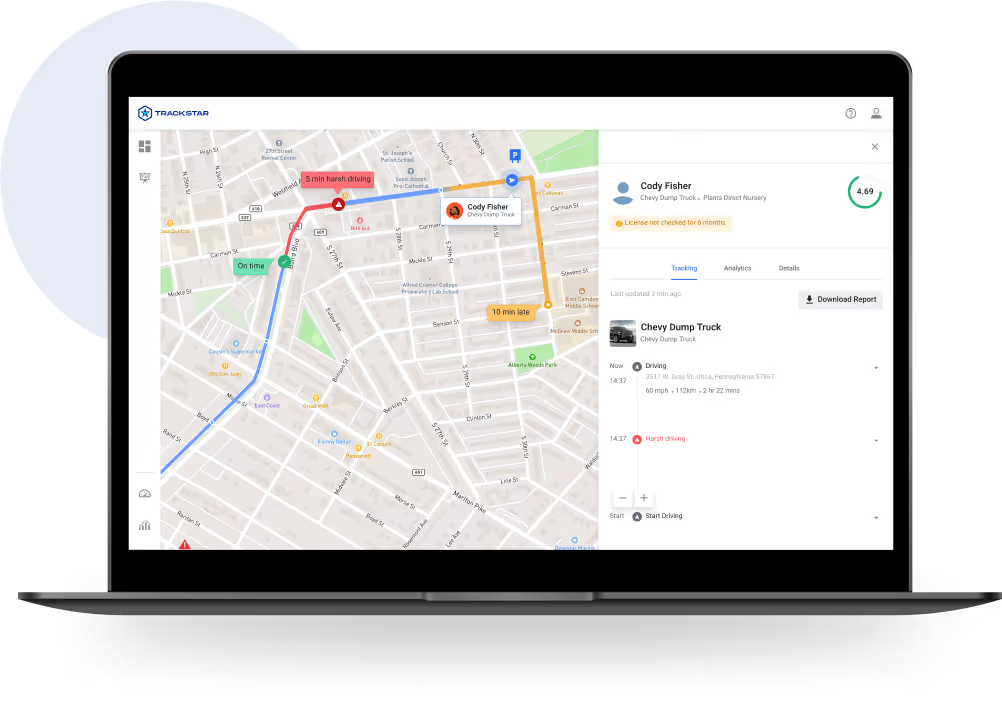
8. Geofencing that supports control and accountability
Geofencing allows you to define specific zones and monitor how assets interact with them.
This can be used to track arrivals and departures, enforce route compliance, and prevent unauthorized usage. It is also useful for improving operational planning and asset allocation.
As of today, geofencing is one of the most widely adopted telematics features for improving compliance and reducing unauthorized vehicle use.
In complex environments, geofencing adds a layer of structure that manual processes cannot match.
9. Custom alerts that focus on what actually matters
Not every fleet has the same priorities. A telematics solution should allow you to configure alerts based on your specific operational needs.
This includes notifications for maintenance events, unsafe driving, excessive idling, or unauthorized movement. The key is flexibility.
With Track Star, alerting can be tailored across multiple data points, from driver behavior to asset health, helping teams focus on what actually requires action instead of reacting to noise.
Too many irrelevant alerts create noise. The right alerts create action.
10. Scalability and flexibility for mixed and growing fleets
A telematics solution should not lock you into a rigid setup.
As your fleet grows or changes, the system should adapt. This includes supporting different asset types, integrating with existing hardware, and scaling without adding unnecessary complexity.
This is especially important for mixed fleets. Many organizations operate across different vehicle types, asset classes, and legacy systems.
Track Star’s hardware-agnostic approach allows fleets to connect to existing vehicle data sources or deploy new tracking where needed, without forcing a full system replacement.
That flexibility becomes a long-term advantage as operations evolve.
Final thoughts
Choosing a telematics solution is not about checking feature boxes. It is about building a system that gives you visibility, control, and the ability to improve over time.
The features above represent what modern telematics should deliver when implemented correctly. Real-time tracking, IoT-driven maintenance, open integrations, and actionable data are no longer optional. They are expected.
The difference comes down to how well those features work together.
With a unified platform like Track Star, telematics becomes part of a broader operational system that connects tracking, maintenance, compliance, and reporting into one place. Schedule a call now.


