

If you’re asking what is HOS, you’re really asking how to keep your drivers legal, your fleet moving, and your risk under control. Hours of Service (HOS) rules define how long commercial truck drivers can be on duty and behind the wheel before they must rest. They exist to reduce fatigue-related accidents and enforce safe driving limits across the trucking industry.
This guide breaks down how HOS actually works in real operations, where fleets struggle with compliance, and how to stay ahead without slowing everything down.
What Is HOS?
HOS refers to federally mandated limits set by the Federal Motor Carrier Safety Administration that regulate driver working hours in the United States. These rules apply to most commercial drivers operating vehicles over 10,000 pounds or transporting regulated goods.
At a high level, HOS trucking rules are designed to answer three simple questions:
- How long can a driver drive?
- How long can they work in total?
- When do they need to rest?
The reason this matters is straightforward. Driver fatigue is one of the leading causes of serious trucking accidents. According to the FMCSA, fatigue can significantly impair reaction time, awareness, and decision-making.
For fleets, non-compliance is not just a safety issue. It leads to fines, failed audits, out-of-service violations, and increased liability in the event of an accident.
The Core HOS Trucking Rules Explained
HOS rules can feel overwhelming at first, but most fleets operate around a few key limits.
- Drivers can drive up to 11 hours after 10 consecutive hours off duty. That is the core driving window.
- They cannot drive beyond the 14th consecutive hour after coming on duty, even if they have not used all 11 driving hours.
- After 8 hours of driving, they must take a 30-minute break.
- There is also a 60/70-hour limit over 7 or 8 days, depending on the carrier’s schedule. Once drivers hit that cap, they must reset with sufficient off-duty time.
These rules sound simple on paper. In reality, they create constant pressure on dispatch, routing, and delivery timelines.
This is where most compliance issues begin.
Hours of Service Logs: From Paper to ELDs
Tracking HOS used to rely on paper logs. That system was easy to manipulate and hard to verify.
Today, electronic logging devices (ELDs) are mandatory for most fleets. These automatically record driving time based on engine activity and sync with hours of service logs.
According to the FMCSA ELD mandate, this shift has significantly improved compliance and reduced log falsification across the industry.
But here is the reality most fleets face.
ELDs solve data collection. They do not solve operational decisions.
You still need to:
- Plan routes that fit within legal driving windows
- Avoid delays that push drivers into violations
- Manage exceptions like traffic, weather, or detention time
That gap between data and action is where compliance either works or falls apart.
Where Fleets Struggle with HOS Compliance
Most violations are not caused by drivers ignoring rules. They come from poor coordination between planning, dispatch, and real-world conditions.
A few patterns show up consistently.
- Schedules that ignore reality: Dispatch plans often assume ideal conditions. One delay can push a driver over their limit
- Lack of real-time visibility: If you cannot see remaining drive time live, you are guessing. And guessing leads to violations.
- Manual tracking gaps: Even with ELDs, some fleets rely on spreadsheets or disconnected systems to manage hours.
- Pressure to deliver: Deadlines sometimes override compliance decisions, especially in high-demand environments.
The result is predictable. Drivers end up close to limits, dispatch scrambles to adjust, and risk increases across the board.
How Smart Fleets Actually Stay Compliant
The fleets that stay consistently compliant do not treat HOS as a reporting problem. They treat it as a planning and visibility problem.
They build compliance into daily operations instead of checking it after the fact.
This usually comes down to three shifts.
First, they monitor hours in real time. Knowing how much drive time a driver has left changes everything. It allows dispatch to adjust before a violation happens.
Second, they align routing with HOS limits. Routes are planned based on legal constraints, not just distance or delivery priority.
Third, they use data to spot patterns. Repeated near-violations often point to systemic issues like unrealistic delivery windows or inefficient routing.
Fleet Telematics As a Solution
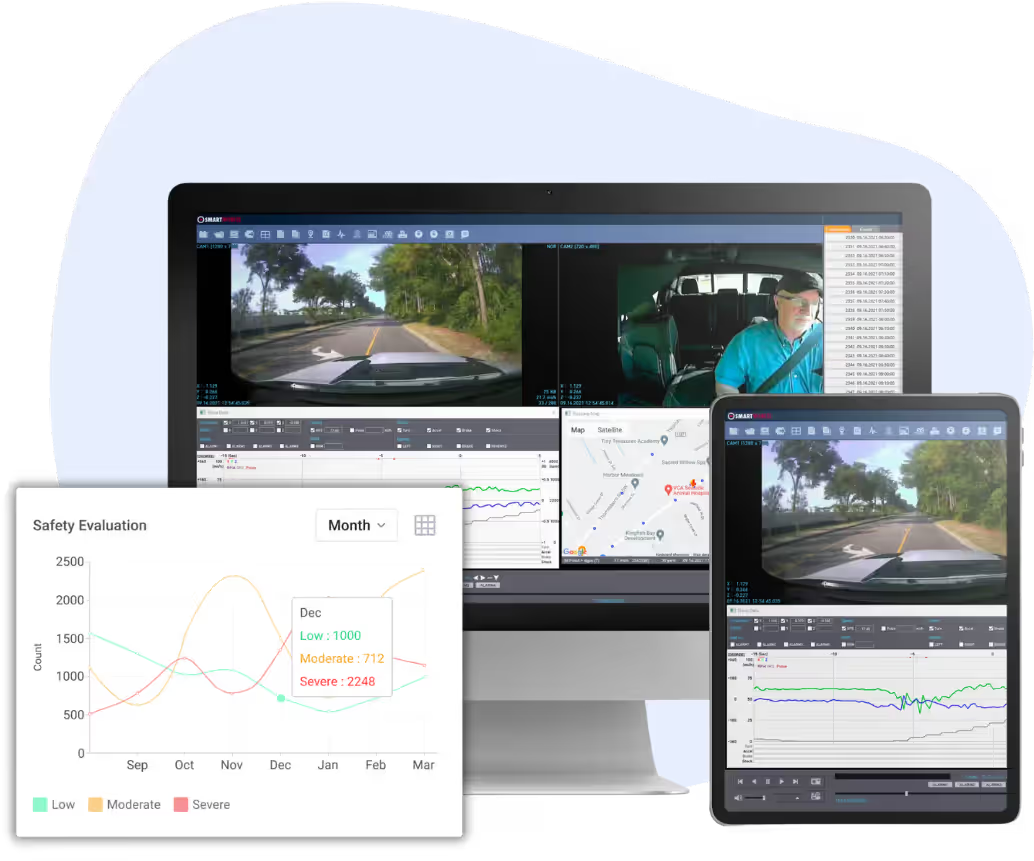
This is exactly where a platform like Track Star comes into play. Not as a basic tracking tool, but as a way to connect driver hours, routes, and real-time fleet data in one place.
With Track Star, you are not looking at HOS in isolation. You are seeing how remaining drive time aligns with actual routes, job assignments, and live conditions on the road. That visibility changes how decisions are made.
Instead of reacting after a violation, a fleet manager can spot the issue early. If a driver has 45 minutes left, Track Star makes that visible in real time and puts it in context. You can reroute them, reassign the stop, or adjust the schedule before it becomes a compliance problem.
That shift from reactive to proactive is what keeps fleets compliant without constantly firefighting.
HOS Compliance Is Not Just About Avoiding Fines
A lot of fleets treat HOS compliance as a regulatory checkbox.
That is short-sighted.
When HOS is managed properly, it directly improves:
- Driver safety and retention
- On-time delivery performance
- Fuel efficiency through better routing
- Legal protection in the event of incidents
So yes, compliance keeps you legal. But it also protects your drivers and your business.
Where Most Systems Fall Short
Many fleets invest in ELDs and assume the problem is solved.
But ELDs only show what already happened.
They do not optimize routes around HOS limits, alert you early enough to prevent violations, or connect hours of service logs with dispatch decisions.
The missing piece is integration. When your tracking, routing, and compliance tools operate separately, you lose visibility. And when you lose visibility, you lose control.
This is where we see the biggest difference with the fleets we work with.
Instead of treating HOS as a standalone feature, we connect it directly with real-time fleet operations.
That means:
- Live visibility into driver hours across your entire fleet
- Alerts before drivers approach limits, not after
- Routing decisions that consider HOS constraints in real time
- Centralized data that ties together tracking, compliance, and performance
For public sector and utility fleets in particular, this becomes critical. You are not just managing deliveries. You are managing response times, service coverage, and safety.
HOS compliance cannot slow you down. It has to work with how you operate.
Final Thoughts
Understanding what is HOS is easy. Managing it across a fleet, in real conditions, is where things get complicated.
In 2026, the fleets that get it right are the ones with the best visibility and the smartest planning. So, if you are constantly dealing with last-minute adjustments, near violations, or compliance stress, it is not a driver problem. It is a systems problem.
Schedule a call with Track Star and see how real-time visibility and smarter routing can keep your fleet compliant without slowing it down.
.png)

