
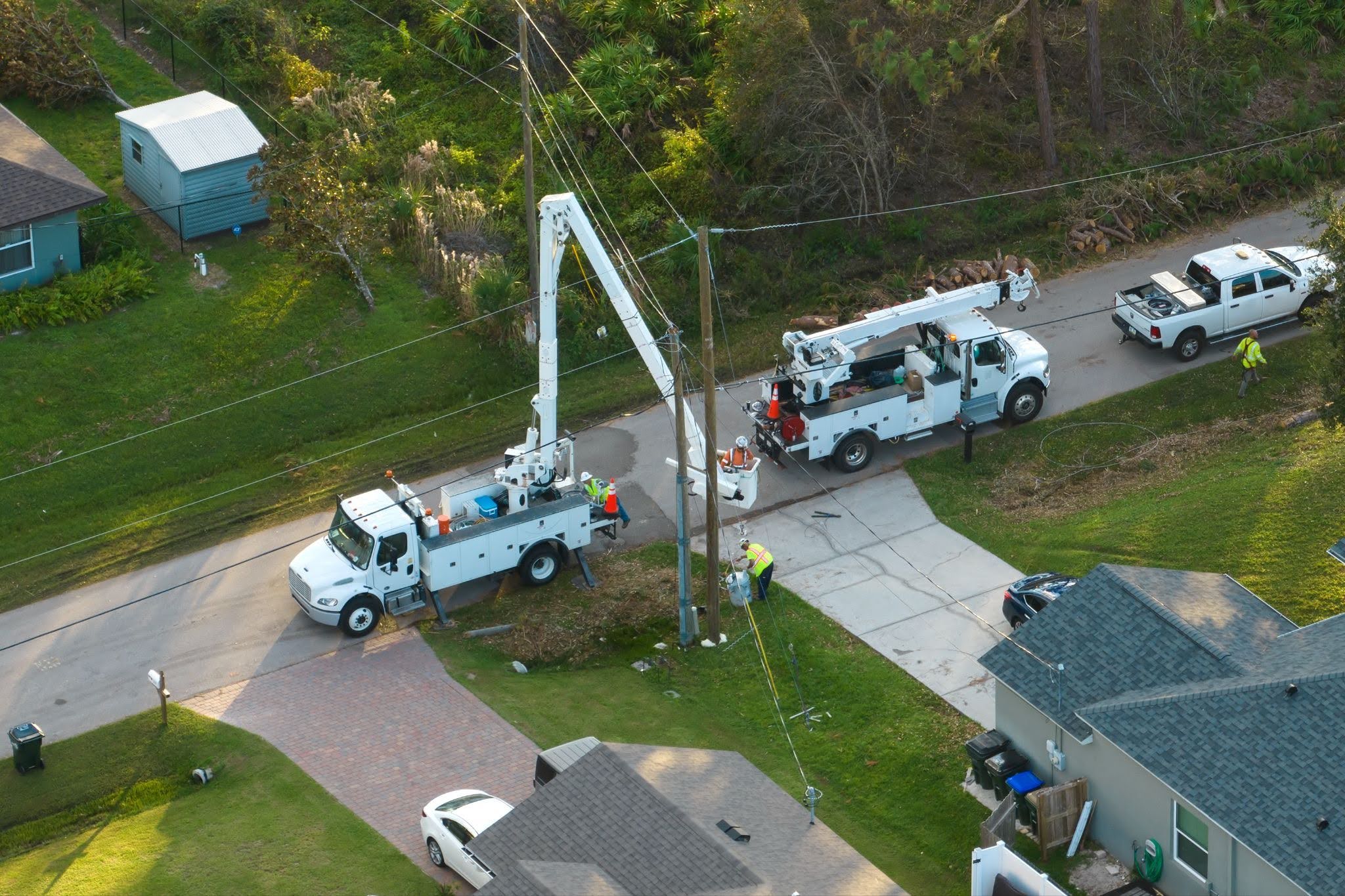
Utility fleet tracking is the use of GPS and telematics to monitor the location, condition, and usage of the vehicles, equipment, and crews that keep power, water, and gas infrastructure running. For most operations it is a cost tool. For a utility, it is a restoration tool.
The difference is what happens when service goes down. A late delivery is an inconvenience. A prolonged outage is a public safety event, a regulatory problem, and a headline all at once.
That raises the stakes on every question a dispatcher asks during a storm. Which crew is closest to the downed line. Which bucket truck is actually available. Utility fleet tracking answers both in real time, and this guide covers how it works and where it earns its keep.
What Utility Fleet Tracking Involves
Utility fleet tracking combines live GPS location with engine data, maintenance records, and equipment monitoring across a utility's entire mixed fleet.
The mix is the hard part. A single utility runs pickups, bucket trucks, digger derricks, generators, trailers, and specialized equipment that never touches a public road. GPS tracking utility vehicle fleet management has to cover all of it, not just the trucks with license plates.
Then there is the environment. Utility crews work in storms, in remote service territory, and at night during restoration. The tracking has to keep working exactly when conditions are worst, which is a higher bar than a typical commercial fleet ever faces.
Why Utility Fleets Are Different
Three things set utility fleets apart, and each one shapes what the tracking has to do.
First, the work is reliability-critical. When crews are slow to reach a fault, customers stay dark and regulators take notice. Restoration speed is measured, reported, and scrutinized in a way that ordinary fleet productivity is not.
Second, the assets are heavily mixed. The value on a utility job site often sits in the equipment rather than the truck, so a system that only tracks vehicles misses much of what matters. This is where utility fleet telematics has to reach past the chassis and cover the equipment too.
Third, the terrain is unforgiving. Rural lines, canyon roads, and storm-damaged areas are exactly where commercial cell coverage fails, and a tracking system that goes dark in those conditions is useless for the work that matters most.
How Utility Fleet Tracking Keeps Crews Moving
The clearest payoff shows up in the field, where minutes translate directly into restored service.
Sending the Right Crew, Not the Nearest Guess
When a fault is reported, a dispatcher working from a static board is guessing. Live location removes the guesswork by showing which crew is genuinely closest and equipped for the job.
That matters most during a multi-site event, when several crews are already committed and the next assignment has to go to the right one. Track Star's live tracking gives dispatch the real picture rather than a best estimate, which is what actually shortens time to restoration.
Coordinating Storm Response and Mutual Aid
Major storms pull in mutual aid crews from neighboring utilities, and suddenly a command center is coordinating trucks it has never tracked before.
Telematics gives that center one live view of every unit in the response, regardless of whose fleet it came from. Crews get routed around damage and confirmed on site automatically, which keeps a large restoration from turning into a coordination problem on top of a grid problem.
Staying Visible in Dead Zones
Utility work happens where coverage is thin, so the tracking has to survive a lost signal.
Quality trackers store location and status on the device when connectivity drops and forward it the moment a signal returns. That means a crew working a remote line is never truly invisible, and the record of where they went stays intact even through a coverage gap. For a utility, that reliability is the whole point rather than a nice-to-have.
How Utility Fleet Tracking Keeps Infrastructure Online
Beyond the immediate response, tracking protects reliability by keeping the fleet itself ready for the next event.
Keeping Bucket Trucks and Equipment Ready
An outage is not the time to discover a bucket truck is overdue for service. Utility equipment wears by engine hours and PTO use rather than miles, since a truck can sit running a hydraulic lift all day without moving.
Track Star schedules preventive maintenance on engine hours and diagnostic data, then opens the work order automatically. That keeps specialized equipment deployable before storm season instead of stranding a crew mid-restoration, and Track Star reports up to 30% lower maintenance costs as the fleet shifts off reactive repairs.
Controlling Fuel and Idling Across Long Routes
Utility crews cover long distances and idle heavily at job sites, which makes fuel one of the largest controllable costs in the operation.
U.S. vehicles waste over 6 billion gallons of fuel a year idling, and field-heavy fleets are among the worst affected. Pairing location data with a fleet fuel management system turns a vague sense that crews idle too much into a specific list of where it happens and how much it costs.
Tracking Every Asset, Not Just the Trucks
A utility's yard is full of value that has nothing to do with vehicles. Generators, trailers, transformers staged for install, and portable pumps all walk off or sit idle without anyone noticing.
Track Star combines telematics with enterprise asset management, so the truck and the equipment it carries live in one record. For water and wastewater operations in particular, that unified view extends to the fixed and portable assets a water utility depends on, and the same approach carries over to the distributed equipment behind renewable energy sites.
Choosing a Utility Fleet Tracking System
Utility fleets rarely start clean, so hardware flexibility usually decides whether a deployment succeeds.
Many trucks already carry modems or OEM telematics, and forcing a rip-and-replace is how projects stall. Track Star is hardware agnostic, working with OEM data, existing modems, OBD-II devices, BLE tags, and third-party sensors, so a utility connects to what it already runs.
Integration is the second requirement. Utilities live in GIS, and fleet data that cannot reach the GIS, the outage management system, or CAD creates manual work forever. Open API integrations belong on the requirements list from the first vendor conversation.
Where Track Star Fits
Most tracking vendors are telematics companies that handle vehicles well and stop there, which leaves a utility running a second system for equipment and a third for maintenance.
Track Star was built to hold the whole operation. GPS tracking, telematics, maintenance, and asset management run in one platform, so a bucket truck, the generator it carries, and the trailer behind it are a single record rather than three.
That comes from 25 years of enterprise deployments, much of it in public-sector and infrastructure work where reliability and accountability are not optional. For utilities balancing restoration speed against public scrutiny, that single source of truth is what makes the fleet a reliability asset rather than a blind spot.
Final Thoughts
For a utility, the fleet is the difference between a brief interruption and a prolonged outage. Utility fleet tracking keeps crews moving to the right faults, keeps the specialized equipment ready before it is needed, and keeps the whole operation visible even when the weather and the terrain conspire against it.
Track Star brings that tracking, maintenance, and asset visibility into one platform built for the infrastructure fleets people depend on. Schedule a call, and we will map it to the crews and equipment your utility runs today.
Frequently Asked Questions
Does utility fleet tracking work in remote areas with poor signal?
Yes. Quality trackers store location and status on the device through a coverage gap and upload it once the signal returns, so crews working remote lines stay accounted for even where cell service is unreliable.
Can one system track bucket trucks and the equipment they carry?
Yes, and for utilities that is the main advantage. A platform combining telematics with asset management holds the truck, the aerial equipment, and staged gear like generators and transformers in one record.
How does tracking help during a major storm response?
It gives command one live view of every crew, including mutual aid units from other utilities, so assignments go to the closest equipped crew and restoration is not slowed by coordination gaps.
Will tracking work with the modems already in our trucks?
Usually. A hardware-agnostic platform connects to existing modems, OEM data feeds, and plug-in devices, which lets a utility avoid replacing equipment across the whole fleet just to deploy tracking.
Can utility crews see only their own assets?
Yes. Site-scoped or role-based permissions let each crew or division see the vehicles and equipment relevant to them while central dispatch keeps the full operational view.


