
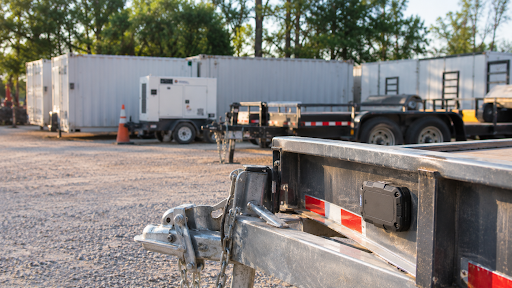
Trailer tracking closes the biggest blind spot in most fleets: the assets with no engine. Your trucks report location and diagnostics all day, but the trailer or generator behind them cannot, so it vanishes the moment it is dropped. That gap quietly holds a large share of what the fleet is worth.
That blind spot is the opportunity. Non-powered assets go missing and sit idle precisely because nobody can see them, and trailer tracking closes that gap. It is one of the highest-return moves a fleet can make, and the tools to do it are cheaper and simpler than most managers assume.
Why Non-Powered Assets Fall Off the Map
Traditional telematics was built around the engine. It draws power and data from the vehicle’s own systems, through OEM feeds, a modem, or an OBD-II port. That works beautifully for anything with a motor.
A trailer has none of that. With no engine, there is no onboard power and no data to pull. The moment it is dropped and the truck pulls away, a conventional fleet system has nothing to report, so the trailer disappears from view until someone physically finds it.
That is why trailer tracking is a different problem from vehicle tracking, and why so many otherwise well-run fleets have a gap exactly where a lot of their value sits.
The Assets Hiding in Your Blind Spot
Trailers are the obvious case, but the gap is wider than that. Most fleets own a long list of valuable things that move, get parked, and never report their location.
Think about what sits in your yards and on your sites: dry and refrigerated trailers, shipping containers and chassis, portable generators and light towers, roll-off dumpsters, and the tool carts that walk between jobs. Each one holds real value, and each one is invisible to a system built only for powered vehicles.
The pattern holds across industries. A waste operation loses track of roll-off containers. A facilities team cannot say which commercial property assets left the building. The gap is the same; only the asset changes.
How to Close the Visibility Gap
The fix is to give non-powered assets their own way to report, independent of any engine. Two methods cover almost every case, and the right choice depends on how far an asset roams and how closely you need to watch it. When you start comparing trailer tracking solutions, that distinction is what separates the ones that fit from the ones that do not.
Battery-Powered GPS Trackers
A battery-powered GPS tracker is a self-contained unit you attach to the asset. It carries its own power and reports location on a schedule, which makes it the right tool for assets that travel, like over-the-road trailers and containers that leave your property.
Because the battery is doing all the work, reporting frequency is the trade-off. Check in a few times a day, and the device lasts a long time. Ping every few minutes and it drains faster. You set the rate to match how closely the asset needs watching.
BLE Asset Tags
For assets that cluster in a yard, a depot, or a building, BLE asset tags are the cheaper and simpler option. A BLE tag is a small, inexpensive beacon that broadcasts its presence to any nearby reader, from a fixed gateway to a passing tracked vehicle.
That makes BLE asset tags ideal for high-count, lower-value items and for confirming what is present in a known location. You will not track a tagged tool across the state, but you will know instantly whether it is still in the yard. Many fleets run both methods together, GPS on the assets that roam and tags on the ones that stay close.
This is where a unified platform matters. Because Track Star is hardware agnostic, it brings battery-powered GPS and BLE asset tags into the same system as your powered vehicles, so the assets without engines stop living in a spreadsheet of their own.
4 Things Trailer Tracking Changes Day to Day
Closing the gap does more than tell you where things are. It changes how the fleet runs. Here is where the return shows up.
1. Stopping Losses and Theft
Non-powered assets are soft targets. A trailer or generator can vanish from a yard overnight with no alert and no witness, and untracked, it rarely comes back. Attach a tracker, draw a geofence around the yard, and a departure outside working hours pings you in real time, while live location gives you and law enforcement a chance to recover it.
2. Measuring Utilization and Detention
You cannot optimize what you cannot see. Tracking shows which trailers are working and which are sitting, so you can rebalance instead of buying more. It also timestamps how long an asset sits at a customer site, which turns detention from a vague complaint into a documented, billable number.
3. Running a Visible Yard
Large yards lose assets in plain sight. Crews spend real time walking rows looking for a specific trailer or container. BLE asset tags and GPS together give you a live map of the yard, so dispatch can send a driver straight to the right unit instead of on a hunt.
4. Keeping Inspections and Maintenance on Track
Trailers are regulated equipment. Under FMCSA rules, a trailer is part of the vehicle inspection and maintenance record, and you cannot service or inspect an asset you cannot locate. Tying trailer location to preventive maintenance means a unit due for a brake check or an annual inspection surfaces before it becomes a violation or a roadside failure.
Final Thoughts
The non-powered side of a fleet is where visibility quietly breaks down, and where competitors who only track vehicles leave the most on the table. Trailer tracking closes that gap with tools that have become affordable enough that the losses they prevent pay for them quickly.
The real advantage comes from seeing everything in one place. Track Star pairs telematics with enterprise asset management in a single platform, the way most vehicle-only systems cannot, so a battery-tracked trailer and the truck pulling it live in the same view, alongside the BLE-tagged equipment back in your yard. Schedule a Call, and we will help you close the visibility gap on the assets your fleet keeps losing track of.
Frequently Asked Questions
Are trailer tracker batteries replaceable or sealed?
It varies by device. Some use replaceable batteries, while others are sealed units you swap out entirely at end of life. Ask how a tracker is powered and its expected service life before you standardize a fleet on one model.
Is it worth tagging low-value tools in bulk?
For high-count items, it often pays off. BLE tags are cheap enough that tagging an entire tool crib or equipment pool cuts losses across the group, even when no single item would justify a GPS tracker on its own.
Which non-powered assets should you track first?
Start with the highest-value and most-lost items, usually trailers, containers, and generators. Tracking everything at once rarely pays off, so prove the return on the assets that go missing or sit idle most, then expand from there.
What happens when a tracked trailer loses signal?
The tracker logs its last known location and updates the moment it regains coverage, so a trailer parked in a dead zone still shows where it was left. You lose the live ping during the gap, not the record of where it went.
Will asset trackers survive the conditions your trailers face?
Purpose-built asset trackers are sealed and rated for weather, vibration, and temperature swings, since trailers and containers live outdoors year-round. Confirm the environmental rating against where your assets actually operate before committing to a device.
