

Choosing the right EV fleet solutions is no longer just about tracking vehicles on a map. Most platforms can do that. The real question is whether the system can help you operate an electric fleet in real conditions?
That means managing range, charging, downtime, driver behavior, and asset performance all at once.
In this guide, we compare leading EV fleet solutions based on what actually matters in day-to-day operations, not just feature lists.
EV Fleet Solutions: At a Glance
Before we get into each solution, let’s take a look at the top players in the field at a glance.
What Most EV Fleet Solutions Get Wrong
Most platforms in the electric fleet tracking space focus heavily on visibility.
They show battery levels, vehicle location, and charging status. That is useful, but it is not enough.
What they often fail to handle well:
- Real-time routing based on range and charging availability
- Downtime planning across vehicles
- Integration between maintenance, dispatch, and charging
- Driver behavior impact on battery efficiency
In short, they track data but do not help you act on it. That gap is where operational issues start.
1. Track Star

Track Star’s EV fleet management system is built for fleets that care about day-to-day operations, not just visibility. While many EV fleet solutions focus on dashboards and reporting, Track Star focuses on how fleets actually run in real conditions. That includes dispatch decisions, downtime management, compliance, and asset performance.
For fleets transitioning to electric vehicles, this matters more than ever. EV operations introduce new constraints like range limits, charging availability, and longer downtime cycles. This makes Track Star especially effective for mixed fleets, where electric and traditional vehicles need to operate together without creating silos.
Public sector, utility, and enterprise fleets benefit most from this approach because their operations are complex and highly dependent on real-time decision-making.
Key EV capabilities
- Real-time vehicle tracking and utilization
- Integration with OEM vehicle data and sensors
- Maintenance tracking across EV and ICE fleets
- Route adjustments based on live conditions
Pros
- Strong operational visibility across fleet and assets
- Works well for mixed fleets transitioning to EV
- Flexible integrations and customization
- Helps manage real-world constraints like delays and downtime
Cons
- Not positioned as an EV-only solution
- EV-specific dashboards may require customization
Verdict
Best for fleets that care about operations, not just EV metrics. Especially strong for organizations managing both electric and traditional vehicles.
2. Samsara

Samsara positions itself as an all-in-one telematics platform with strong EV capabilities built into its ecosystem. It is one of the more advanced platforms when it comes to EV telematics, offering detailed visibility into battery performance, energy consumption, and charging behavior.
The platform is designed for large-scale fleets that want centralized control over operations, safety, and sustainability.
However, Samsara’s strength is also its complexity. It is built for enterprise environments, which means implementation, pricing, and ongoing management can be more demanding. For fleets that want deep EV insights and have the resources to support a full-scale system, it is one of the more complete options on the market.
Key EV capabilities
- Battery health and charge monitoring
- EV energy usage analytics
- Charging insights and reporting
- OEM integrations
Pros
- Strong EV-focused feature set
- Clean and modern interface
- Enterprise-level scalability
Cons
- High cost and contract requirements
- Can be overbuilt for smaller fleets
Verdict
A top choice for large fleets fully committed to electrification and willing to invest heavily.
3. Geotab
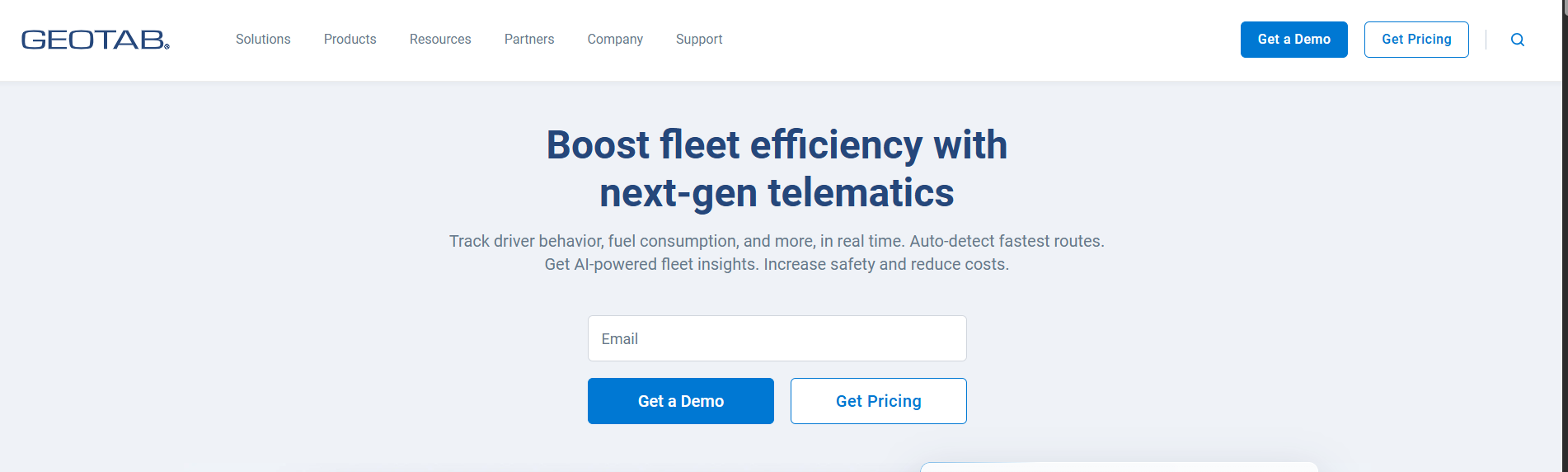
Geotab is one of the most data-focused EV fleet solutions available, known for its deep analytics and strong integration with OEM vehicle data. It offers one of the most comprehensive views into electric vehicle performance, including battery degradation, range trends, and energy efficiency across different vehicle types.
What sets Geotab apart is its ability to aggregate and analyze large volumes of fleet data. It is widely used by organizations that need detailed reporting and long-term insights, such as government agencies and large enterprise fleets.
That level of depth comes with trade-offs. The platform is not as plug-and-play as others, and extracting value often requires a more technical setup or internal expertise. For fleets that want to go beyond surface-level tracking and truly understand EV performance over time, Geotab stands out.
Key EV capabilities
- Detailed EV analytics and benchmarking
- Range tracking and battery performance
- Wide OEM compatibility
Pros
- Best-in-class EV data insights
- Extensive marketplace and integrations
- Strong for large, complex fleets
Cons
- Steeper learning curve
- Requires technical setup to unlock full value
Verdict
Ideal for data-driven fleets that want full control over EV performance and analytics.
4. Motive

Motive is primarily known for driver safety and efficiency, and its EV capabilities are built as part of a broader telematics platform rather than as a core focus. It offers basic electric fleet tracking alongside strong safety tools, making it a solid option for fleets that prioritize driver behavior and compliance.
The platform integrates AI-driven safety features, driver coaching, and performance monitoring, which can indirectly benefit EV operations by improving driving efficiency and reducing unnecessary energy usage.
However, when it comes to EV-specific insights like battery health, charging optimization, or range-based routing, Motive is not as advanced as more EV-focused platforms. It works best for fleets that are not fully electric but want to maintain consistent safety standards.
Key EV capabilities
- Basic EV tracking and monitoring
- Driver behavior insights
- Fleet performance metrics
Pros
- Strong safety features
- Good all-around telematics platform
Cons
- Limited EV-specific depth
- Not built specifically for electric fleet optimization
Verdict
Better suited for safety-focused fleets rather than EV-first operations.
5. Verizon Connect
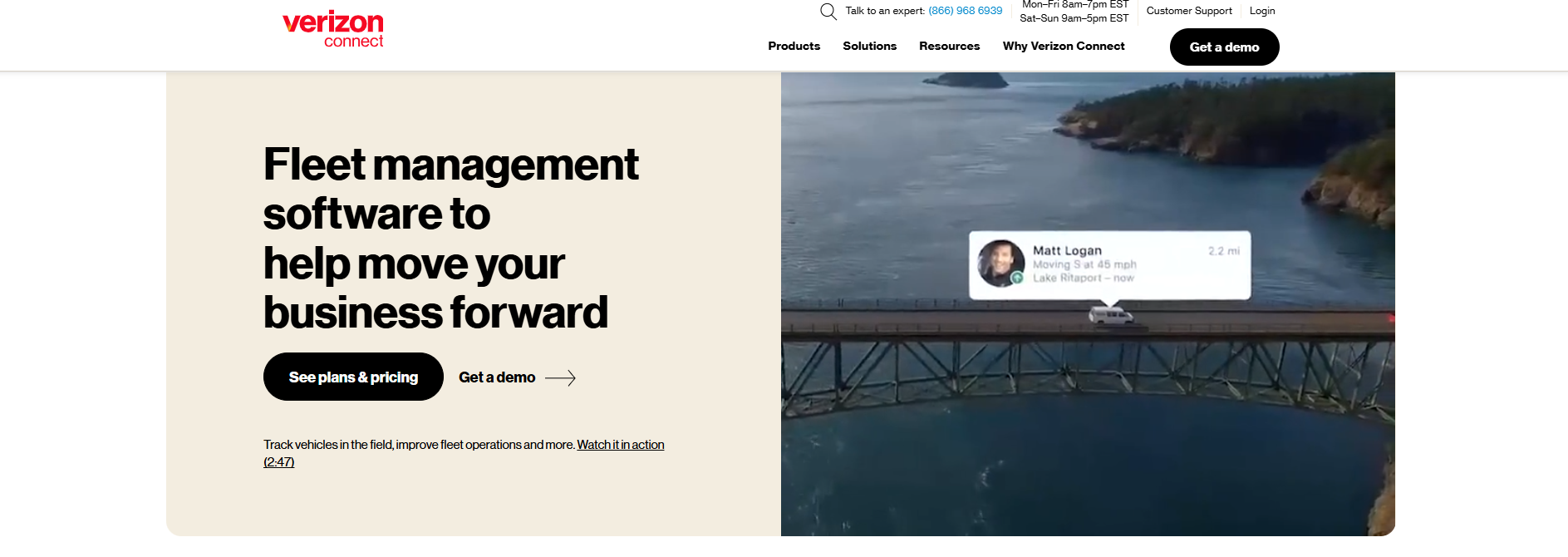
Verizon Connect is a well-established telematics platform that offers a wide range of fleet management features, including basic support for electric vehicles. Its strength lies in reliability and broad functionality rather than specialization.
For fleets already using Verizon Connect, adding EV tracking is a natural extension. The platform provides visibility into vehicle location, usage, and some EV-specific data points, but it does not go as deep into electric fleet optimization as newer or more specialized solutions.
It is often chosen by organizations that value stability and brand trust over cutting-edge features. While it covers the essentials, fleets looking to actively optimize EV operations may find it lacking in areas like real-time decision-making and advanced analytics.
Key EV capabilities
- Basic EV monitoring
- Fleet tracking and reporting
Pros
- Stable and established platform
- Broad feature coverage
Cons
- Limited innovation in EV space
- Less focus on real-time operational decisions
Verdict
A safe choice, but not ideal for fleets looking to optimize EV performance.
6. Fleetio

Fleetio is not a traditional telematics platform. It focuses on fleet maintenance and asset management, which becomes increasingly important as fleets adopt electric vehicles.
EVs require different maintenance strategies compared to internal combustion vehicles. While they have fewer moving parts, battery health, service intervals, and long-term performance still need to be tracked closely. Fleetio helps manage these aspects through structured maintenance workflows and reporting.
However, it does not provide real-time tracking or telematics data on its own. This means it is best used as part of a broader stack rather than a standalone EV fleet solution. Fleets that pair Fleetio with a telematics platform can benefit from both operational visibility and strong maintenance management.
Key EV capabilities
- Maintenance tracking for EVs
- Service scheduling
Pros
- Excellent maintenance workflows
- Easy to use
Cons
- Limited real-time tracking
- Not a full EV telematics solution
Verdict
Best used alongside a telematics platform, not as a standalone EV fleet solution.
How to Choose the Right EV Fleet Solution
If you are evaluating EV fleet solutions, focus on what actually impacts operations.
Ask:
- Can this system help me manage range in real time?
- Does it connect routing, charging, and driver behavior?
- Can I act on the data, or just view it?
Electric fleets introduce new constraints. Range limits, charging infrastructure, and battery health all affect operations in ways traditional fleets never had to deal with.
If your system cannot adapt to those constraints in real time, it will create friction instead of solving it.
Final Thoughts
The best EV fleet solutions in 2026 are the ones that help you make decisions.
Electric fleet tracking is only the starting point. What matters is how that data connects to routing, maintenance, compliance, and daily operations. That is the difference between tracking a fleet and actually running one.
If you are looking for EV fleet solutions that go beyond dashboards and help you manage real operations, it is time to see how Track Star fits into your stack.
Schedule a call and see how real-time fleet data helps you manage range, routing, and performance without guesswork.

.png)
.png)