Shipping Asset Management
A shipping operation runs on more than its trucks. Track Star's shipping asset management brings your fleet and the equipment that moves freight into one system, so nothing gets lost between the warehouse and the customer.
Trusted by leading fleets nationwide





Know Where Your Freight Assets Are
A shipping operation's assets are constantly moving and constantly out of sight. Trailers sit at customer docks while containers and reusable equipment scatter across yards and warehouses. The equipment that keeps freight moving is often the hardest to account for.
Track Star brings the location and full maintenance history of every asset into one platform, from the delivery fleet and freight units to the forklifts and equipment inside every warehouse. Operations and maintenance teams work from the same record instead of separate tools that each hold one piece.
With the whole operation in one view, equipment gets located instead of written off, and freight units get recovered before they go missing for good.

What You Can Track

Delivery & Line-Haul Fleet
Trucks, tractors, vans, and delivery vehicles that move freight between facilities and out to customers.
Trailers, Containers & Chassis
Trailers, intermodal containers, chassis, and swap bodies that carry freight and scatter across yards and customer sites.
Warehouse & Dock Equipment
Forklifts, reach trucks, pallet jacks, and dock equipment that keep goods moving through every facility.
Cargo Handling Equipment
Cranes, container handlers, conveyors, and sortation equipment that load and stage freight at high volume.
Returnable & Reusable Assets
Roll cages, reusable containers, totes, and specialized packaging that carry real value and go missing between sites.
Facility & Power Systems
HVAC, generators, backup power, and dock systems that keep warehouses and distribution centers running.
What Our Clients Say
“Having equipment at the job when promised; inspecting and fueling before delivery; making business choices that positively impact everyone involved; and asking the questions that help us do right by each of our customers are at the heart of everything we do. Track Star helps us make good on our promises.”
Ed Radel
Leppo Rents

“Track Star's solution opens opportunities for NAIPTA. We have a valuable tool to help us make smarter decisions about today’s operations, and plan for the future.”
Wade Forrest
NAIPTA
"We’re able to look at usage from multiple angles and predict optimal timing for vehicle maintenance, planned maintenance prevents unexpectedly pulling a squad car out of service—and potentially impacting public safety"
Aaron Russell
City of Burleson


Why Shipping Operators Use Asset Management
Shipping asset management gives operators one record across the fleet and the equipment that keeps freight moving. Track Star ties location and condition to every asset, so equipment stays available, and reusable units stop disappearing.
• One view of the fleet and the equipment that moves freight
• Fewer breakdowns through proactive, condition-based maintenance
• Reusable containers and cages recovered instead of replaced
• Less time lost hunting for equipment across yards and warehouses yards
• Freight units accounted for from the warehouse to the customer
• A single, accurate record shared across operations and maintenance

How Track Star Works
Track Star connects to assets with whatever fits each one. Trucks and cargo equipment report location and diagnostics through OEM data and GPS, so the delivery fleet stays on its fleet maintenance schedule. Trailers and containers carry battery-powered GPS. Reusable assets and warehouse equipment carry BLE tags so they stay visible indoors and across the yard.
Powered assets report on their own, while trailers and passive equipment stay tracked without a manual log. Coverage follows freight from the warehouse to the yard and out on the road.
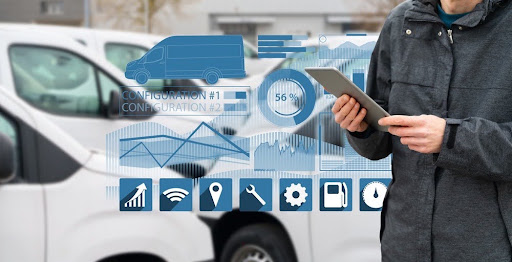
Everything lands in one dashboard where operations and maintenance see location, condition, service status, and lifecycle cost together. Enterprise asset management and telematics run in one platform, so the fleet and the warehouse stop living in separate systems.

Built For Operations That Move Freight Around The Clock
For more than 25 years, Track Star has supported organizations managing large, mixed asset environments across the public and private sectors. Shipping and logistics operations fit that profile, with fleets and warehouse equipment that run at high volume and never sit still.
The platform combines asset tracking, enterprise asset management, maintenance, and compliance reporting in one system. It stays hardware-agnostic and works with the telematics already in use. It scales from a single distribution center to a national network.
Shipping operators can bring their fleet and warehouse equipment under one roof with the same platform that manages complex mixed fleets, backed by the visibility their operations demand.


Find out what you could save
Schedule a quick call to discover exactly how we can improve your fleet operations.
+1 800-661-3515Frequently asked questions
Yes. Track Star runs on open APIs, so asset location and maintenance data can flow to and from the warehouse and transport systems you already run. Equipment and freight-unit data feed one record instead of sitting in a separate tool no one checks during a shift.
GPS and geofence alerts help operators spot a theft as it happens and follow a trailer or container while it moves. That location trail gives your team and law enforcement what they need to recover the unit, and the freight riding in it, faster.
Geofences can be set around yards and customer sites, with alerts when a trailer or container enters or leaves. Operators see how long units dwell where they should not and catch equipment leaving a site without authorization, so nothing quietly walks off between a delivery and the return trip.
By tracking how often each trailer and container actually moves, Track Star shows what is working and what sits idle. Operators use that to trim an oversized pool or justify new units with real numbers instead of guesswork about how many they need.
Access can be scoped by partner, so your team and the 3PLs you work with each see the equipment they are responsible for. Shared trailers and equipment sit in one platform, so nothing gets lost in the handoffs between companies.