Airport Asset Management Software
An airport runs on hundreds of vehicles, ground support units, and facility systems spread across a secured site. Track Star's airport asset management software brings your mixed fleet and facility assets into one system, so equipment stays located and maintained.

Trusted by leading fleets nationwide





See And Manage Every Asset On The Ground
An airport is one of the most asset-dense operations. Hundreds of ground support units, service vehicles, and facility systems work across a large, secured site around the clock, often split among different departments, airlines, and ground handlers. Finding one tug, or knowing whether a jet bridge is due for service, can mean checking several systems or walking the ramp.
Track Star brings the location, condition, and maintenance history of every asset into one platform, from ground support equipment and vehicles to terminal and facility systems. Operations, maintenance, and facilities teams work from the same record instead of separate tools that each hold one piece.
With the whole ground operation in one view, crews find equipment fast, maintenance stays ahead of the failures that delay flights, and the airport can account for a huge, mixed asset base across every department.

What You Can Track

Ground Support Equipment
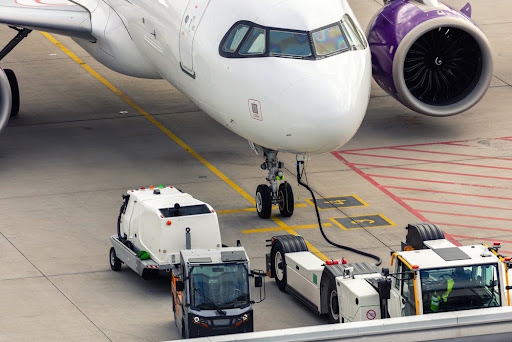
Tugs, pushback tractors, belt loaders, ground power units, and baggage tractors report location and engine hours across the ramp.
Airfield & Service Vehicles
Fuel trucks, catering vehicles, follow-me cars, maintenance trucks, and security patrol vehicles stay tracked across airside and landside.
Terminal & Facility Systems
Jet bridges, escalators, elevators, HVAC, and baggage handling systems tie to inspection schedules and maintenance history.
Snow & De-icing Equipment
Plows, brooms, sweepers, and de-icing rigs that keep runways, ramps, and access roads clear.
Emergency & Backup Systems
Aircraft rescue and firefighting vehicles, generators, and backup power stay ready, documented, and inspection-current.
Portable & High-Value Equipment
Tools, spare parts, and testing gear carry tags so they stay accounted for across a large site.
What Our Clients Say
“Having equipment at the job when promised; inspecting and fueling before delivery; making business choices that positively impact everyone involved; and asking the questions that help us do right by each of our customers are at the heart of everything we do. Track Star helps us make good on our promises.”
Ed Radel
Leppo Rents

“Track Star's solution opens opportunities for NAIPTA. We have a valuable tool to help us make smarter decisions about today’s operations, and plan for the future.”
Wade Forrest
NAIPTA
"We’re able to look at usage from multiple angles and predict optimal timing for vehicle maintenance, planned maintenance prevents unexpectedly pulling a squad car out of service—and potentially impacting public safety"
Aaron Russell
City of Burleson

Why Airports Use Asset Management Software
Airport asset management software gives operators one record of a mixed, sprawling asset base that no single team can see on its own. Track Star ties location, condition, and cost to every asset, so ground equipment stays available, and facilities stay maintained.
• Fast location of ground support equipment across the airfield
• Higher availability of the vehicles and GSE that keep flights moving
• Facility systems like jet bridges kept on inspection and maintenance schedules
• Reduced equipment loss across a large, busy site
• Maintenance and inspection records ready for audits and reporting
• Longer asset life and lower repair costs from proactive maintenance

How Track Star Works
Track Star connects to assets with whatever fits each one. Ground support equipment and vehicles report location, engine hours, and diagnostics through OEM telematics or GPS. Terminal and facility systems tie to condition data and inspection schedules. Portable equipment and tools carry BLE tags.
Powered equipment reports on its own, and passive assets stay tracked without waiting on a manual log. Coverage spans the ramp, the airfield, and the terminal, so equipment stays visible wherever it moves across the site.
Everything lands in one dashboard where operations, maintenance, and facilities see location, condition, service status, and lifecycle cost together. Enterprise asset management and telematics run in one platform, so the fleet and the facilities stop living in separate systems.

Built For Complex, Around-The-Clock Operations
For more than 25 years, Track Star has supported organizations managing large, mixed, and closely regulated asset environments across the public and private sectors. Airports fit that profile closely, with publicly accountable operators running enormous mixed fleets that cannot afford downtime.
The platform combines asset tracking, enterprise asset management, maintenance, and compliance reporting in one system. It stays hardware-agnostic, works with the telematics and devices already in use, and scales from a single terminal operation to a large hub.
Airport operators can bring ground equipment, vehicles, and facility assets under one roof with the same platform that manages complex public fleets, backed by the visibility and records those operations demand.


Find out what you could save
Schedule a quick call to discover exactly how we can improve your fleet operations.
+1 800-661-3515Frequently asked questions
Equipment from different airlines, ground handlers, and airport departments can be organized and filtered in one platform. Shared and tenant-owned assets sit alongside airport-owned equipment, so operations get one accurate view of everything on the ground rather than a separate list per operator.
Yes. Geofences can be drawn around airside, restricted, and secure zones, triggering alerts when a vehicle or piece of equipment enters or leaves. That helps operations keep the right equipment in the right areas across a controlled, high-security site.
By tracking how often each tug, loader, and ground power unit is actually used, Track Star shows which equipment earns its place and which sits idle. Airports use that to trim an oversized GSE fleet or justify new units with real numbers.
Track Star keeps de-icing rigs, plows, and sweepers on maintenance and inspection schedules year-round, so they are serviced and ready before the first storm. Operations confirm the winter fleet is available instead of discovering a dead unit during an event.
Track Star captures engine idle time and fuel use across ground support equipment, so operations can see which units sit idling on the ramp. That helps cut unnecessary run time and fuel cost, and supports the air-quality goals airports increasingly have to meet.