Unified Computerized Maintenance Management System
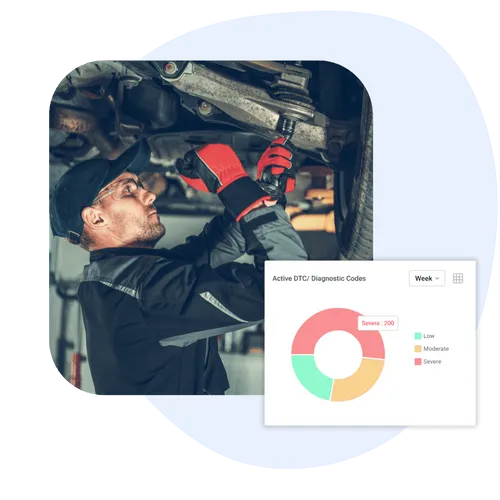
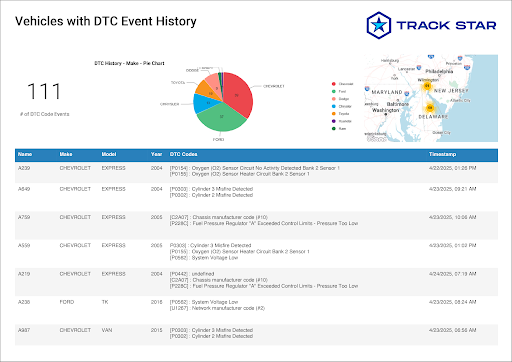
A PM schedule is only as good as the meter reading behind it. Track Star's computerized maintenance management system pulls engine hours and fault codes straight off the asset, so services trigger on real usage instead of a date someone picked.
Trusted by leading fleets nationwide





The Meter Reading Nobody Entered
Most maintenance software assumes a person types the number in. A tech writes engine hours on a clipboard, it gets keyed in three weeks later, or it never gets keyed in at all.So the PM fires on a calendar instead.
The standby generator that ran four hours all quarter gets a full service. The pump that ran flat out through a wet season gets nothing until it fails.A computerized maintenance management system solves this by reading usage off the asset itself.
The interval counts what the equipment actually did, and the work order opens when the machine has earned it.


Fixed Assets & The Fleet That Services Them
Track Star runs enterprise asset management and telematics on one platform. The lift station, the generator, and the truck the crew drives out to service them all live in the same register with the same maintenance history.
Engine hours and fault codes arrive through OEM feeds, OBDII, or existing vehicle modems. Fixed equipment reports through BLE and third-party sensors, so a pump or a compressor carries live runtime the same way a vehicle does.
That is the difference between a computerized maintenance management system built for buildings and one built for an operation where half the asset base moves.
What Our Clients Say
“Having equipment at the job when promised; inspecting and fueling before delivery; making business choices that positively impact everyone involved; and asking the questions that help us do right by each of our customers are at the heart of everything we do. Track Star helps us make good on our promises.”
Ed Radel
Leppo Rents

“Track Star's solution opens opportunities for NAIPTA. We have a valuable tool to help us make smarter decisions about today’s operations, and plan for the future.”
Wade Forrest
NAIPTA
"We’re able to look at usage from multiple angles and predict optimal timing for vehicle maintenance, planned maintenance prevents unexpectedly pulling a squad car out of service—and potentially impacting public safety"
Aaron Russell
City of Burleson


Knowing What Is Actually Past Due
Six thousand active schedules is normal for a mid-size public works or utility operation. The question is never what exists. It is what needs a tech today. Track Star's computerized maintenance management system answers that on one screen:
• % To Pending: Every schedule shows progress toward its next service as a percentage, so an asset at 90% surfaces before one at 70%.
• Status Bands: On Schedule, Pending, or Past Due on every line. No interpretation required.
• Saved Filters: Build the view once, scope it to your group or site, and open the same list every morning.
• Site-Scoped Permissions: Each department sees only its own assets, so water, streets, and fleet run separate backlogs without separate systems.

Capabilities Built On Live Asset Data

Work Orders
Open a work order from a triggered schedule, a fault code, or a failed inspection. Assign it, track it to close, and keep the labor and parts against the asset record.
Learn More
Parts & Inventory
See what is on the shelf before promising a repair date. Track Star ties parts consumption to the asset that used them, so cost per asset is real rather than estimated at year-end.
Learn More
Audit-Ready History
Every service, inspection, and repair stays attached to the asset for its full lifecycle. When a regulator asks what was done and when, the answer is one record, not a filing cabinet.
Learn More
How A PM Schedule Is Built
A schedule in Track Star is a named interval, a task list, and a trigger. Oil Change carries "Check oil level, replace oil filter." Brake Inspection carries "Inspect brake pads, check brake fluid." The tech opens the job and the checklist is already there. Here is what a planner controls on each one:
• Task Lists Per Interval: Define the work once and every asset on that interval inherits it, so a brake inspection means the same thing across 6,000 records.
• Active Toggles: Switch a schedule off for a seasonal or out-of-service asset without deleting its history or its future triggers.
• Group Assignment: Attach schedules to a group ID rather than one asset at a time, and new equipment picks up the right PM the day it is added.
• Mobile Field Access: Techs pull the task list and close the job from the field, so the record updates when the work happens instead of at the end of the week.
CMMS Platforms Were Built For Buildings
The category grew up around facilities. Fixed plant, fixed meters, a person walking a route with a clipboard. That model holds until the asset register includes a fleet, and then the readings stop arriving.
Track Star has spent 25 years in operations where both exist at once. Utilities, municipalities, public works, and school districts run treatment plants and rolling stock off the same platform, with the same PM logic and the same audit trail.
The maintenance question is the same either way. What does this asset need, and when did it last get it? The answer should not depend on whether the asset has wheels.


Find out what you could save
Schedule a quick call to discover exactly how we can improve your fleet operations.
+1 800-661-3515Frequently asked questions
A computerized maintenance management system centralizes asset records, preventive maintenance schedules, work orders, and parts inventory in one platform. It replaces spreadsheets and paper logs so maintenance teams can track what every asset needs and prove what was done.
Track Star does. Fixed equipment reports runtime through BLE and third-party sensors while vehicles report through OEM feeds or OBDII, and both sit in one asset register with the same schedules and the same history.
Intervals run on time, mileage, or meter readings such as engine hours. Track Star pulls those readings off the asset automatically, then shows progress toward each service as a percentage so the backlog sorts itself by urgency.
Yes. Task lists, asset history, and job status are available on mobile, so a tech completes the checklist and closes the work order at the asset. The record updates immediately rather than after a return trip.
A CMMS focuses on maintenance execution: schedules, work orders, and repairs. EAM covers the full asset lifecycle including acquisition, utilization, cost tracking, and disposal. Track Star runs both on one platform alongside telematics.